Stories possess the profound ability to change worlds, and their truest magic lies in pulling us back to the exact piece of dirt that raised us.
Three months after the premiere of Op soek na Maskam, the dust has settled, but the echo in the community remains incredibly loud. Creating this doccie was a deliberate act of return. It was a challenge to the conventions of corporate filmmaking, and fundamentally, it is a homage to the unique complexity and the deep contrasts of the Matzikama.

The Catalyst and the Contrast
I spend a lot of my time trying to articulate the value of story to accounting departments. People in these rooms think in quarters and financial years. As they should, accountants need to be accountable and you only measure that by the tangible.
It is extremely difficult to explain how a narrative impacts the bottom line, yet we live and die by the rule of show, tell, and experience. Classic storytelling principles survive the test of time. A powerful story becomes a passive product that transcends time and context, continuing to work and be told for generations.
It took me a long time to figure out what I want to do with my life. I have had the privilege to travel, to work in cities, and to make all kinds of content for other people’s agendas. Somewhere in that process, I realised that stories truly do change worlds. To prove it, I started with the place I know best.
I grew up in the Matzikama. I know it intimately. Returning there over the last few years, I systematically saw the town’s infrastructure and the agricultural- and mining driven economy struggling. I lack the skills to contribute as a farmer or a miner, but my job is to solve unique challenges with the skill set I have.
We set ourselves a massive challenge. Can we do what we do for brands and positive impact organisations, move the needle, for a geographical area? Can we aim at the fluffy metrics of community involvement, cultural pride, and a shared reference point?
Op soek na Maskam became our ultimate case study. We created a major awareness product to encourage tourists to look deeply at the unique biome and the resilient people who thrive there. Furthermore, we wanted to show our clients that we believe in our product enough to be vulnerable ourselves. We relied entirely on a compelling story, operating completely independently of massive budgets.
The Engine of Constraint
In production, constraint acts as a unique creative power. Many production companies abandon projects the moment they fear missing their standard. Quality, however, comes in a myriad of different ways. All we had to do was take our process, apply it to this case study, and work with the constraints.
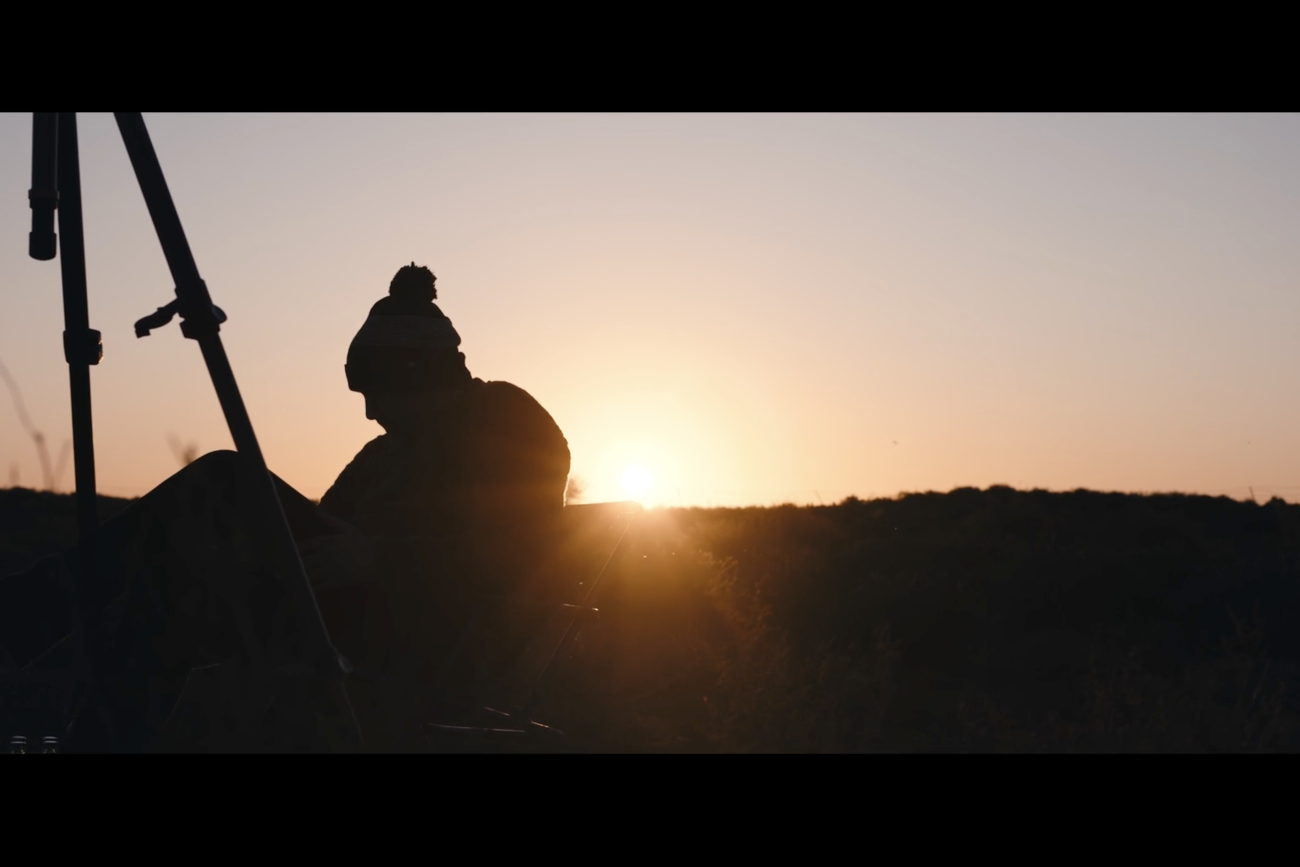
We had extreme parameters. Dewet van Rooyen and myself were on the ground for exactly three days, using the kit we already owned, and a budget of maybe R30,000 cobbled together through community funding. Local businesses offered free accommodation, fuel, and food. Anything extra would blow the budget.
Then the ultimate constraint arrived in the form of the weather. I started panicking.
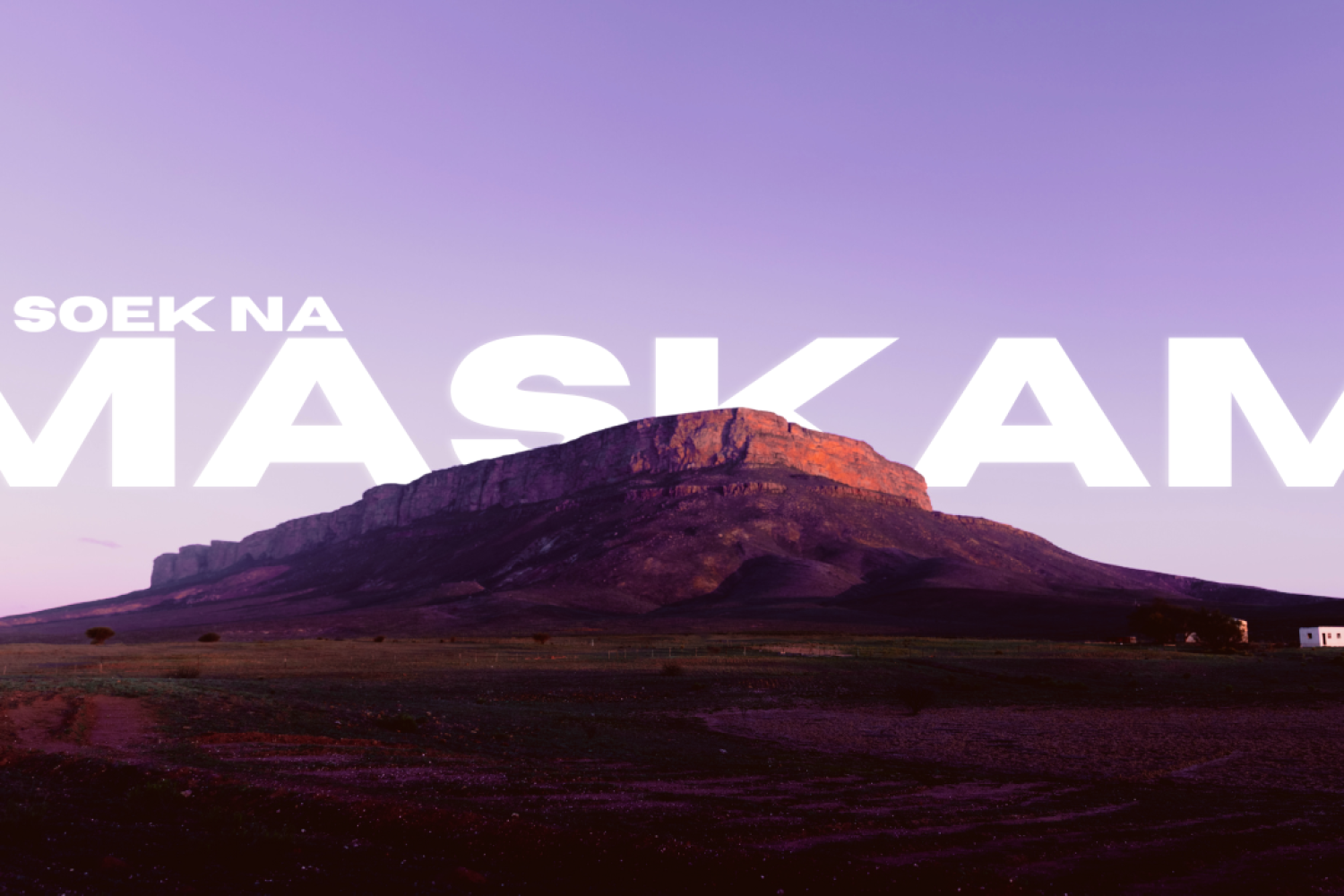
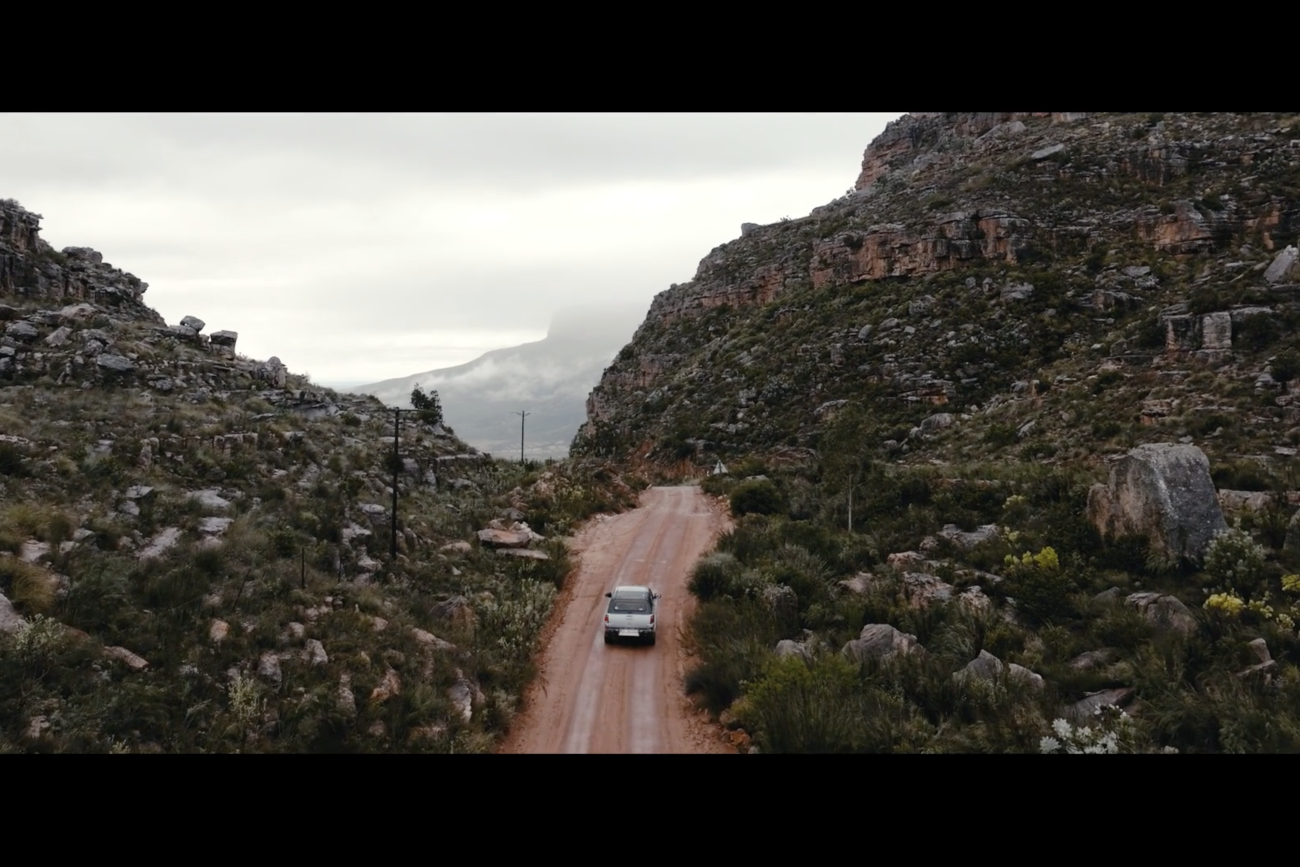
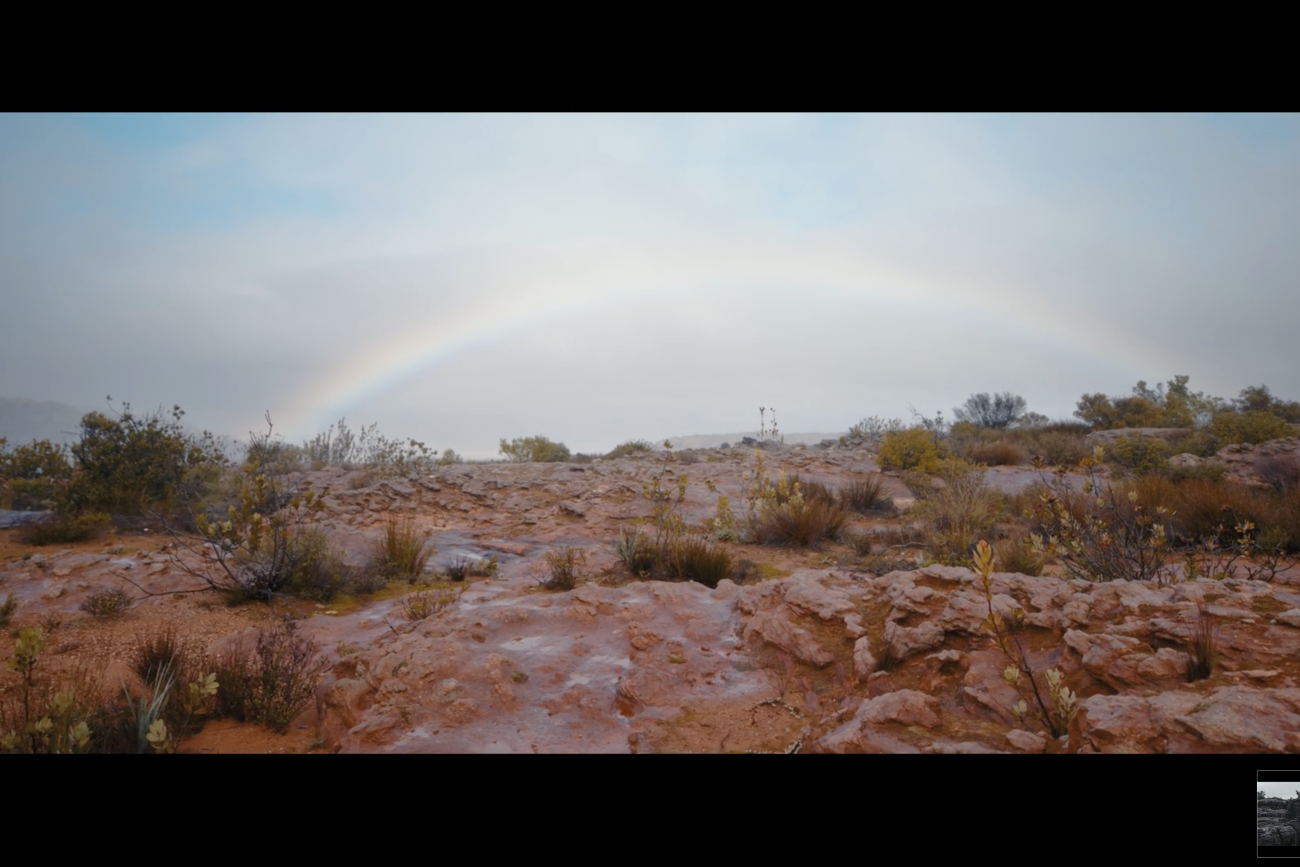
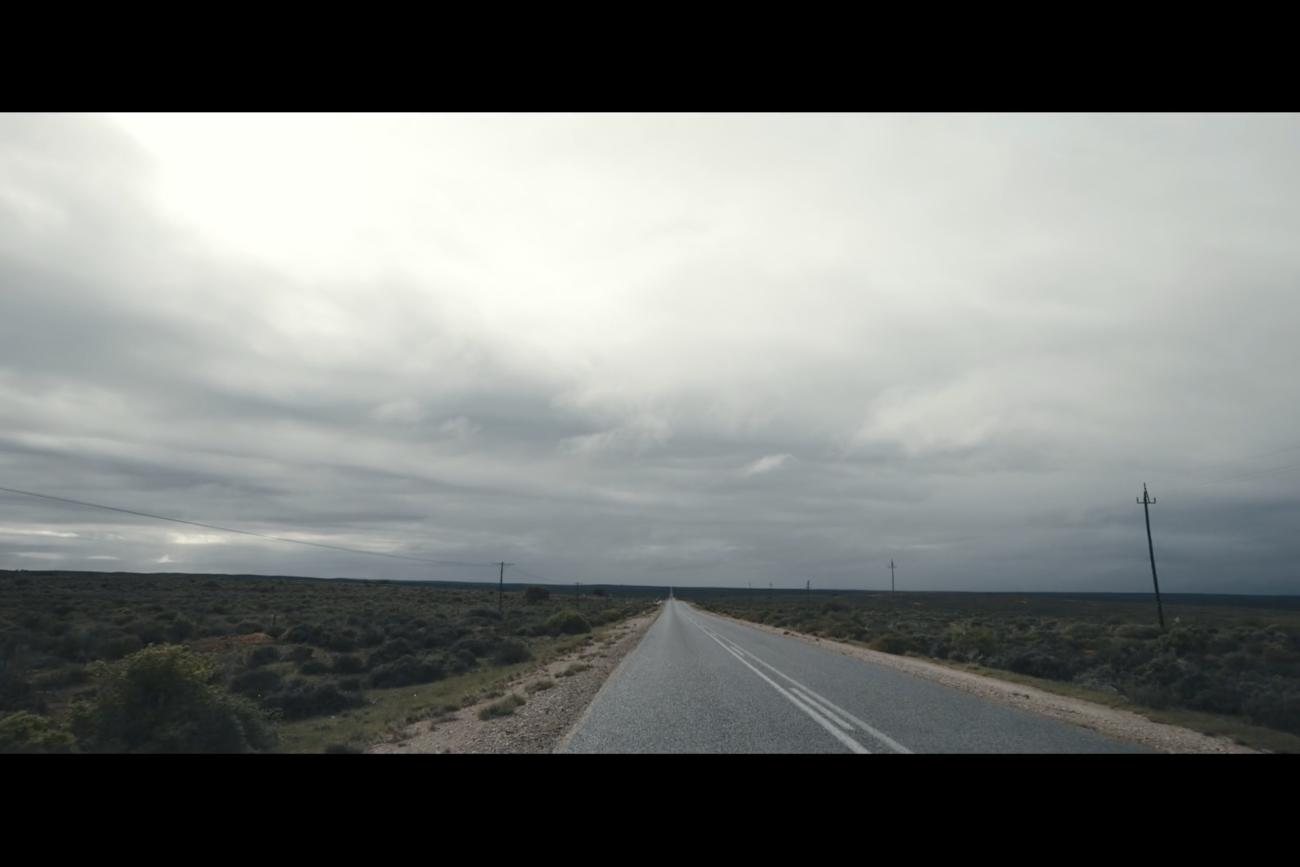
We had planned a very specific aesthetic. We wanted to capture the mountain’s famous purple hue during the precise light of the blue hour. We went out there when the skies are historically crystal clear. Instead, from day one, we got low cloud, fog, and drizzle. Locals have a running joke. When Noah prepped the ark for the massive flood, Namakwaland only received a dense mist. That perfectly describes what we encountered.
For three days, the mountain refused to show her face. Much like life, when you are in the thick of things, flustered and pressured, the environment eventually aligns exactly as it should. Opening ourselves to possibility leads to moments that are timeless.
On the very last day, in the single hour we had set aside to take the one picture we needed to close the loop on our story, Maskam realised what we were busy with. The sky opened. The sunset hit the rock, giving us this beautiful purple hue contrasting with a dark foreground featuring a small farm house. It captured human smallness and temporariness perfectly. The contrast was unbelievable. You had this intense light on one side of the mountain and deep, dark shadows on the other. It was a perfect visual representation of the area itself, an environment defined entirely by extremes.
Then, an hour later, she drew the veil yet again, letting us know how aware she was of our presence.
Structuring the Unstructured
We actively chose to ignore trends and narrative hooks, remaining fully responsive to the environment. Authenticity is key. We built the story around how life actually is. Life in the Matzikama is a slower burn. It is measured. The farmers here think in cycles of five, ten, or twenty years, and the doccie mirrors that exact patient energy. The narrative maintains a constant, grounded rhythm.
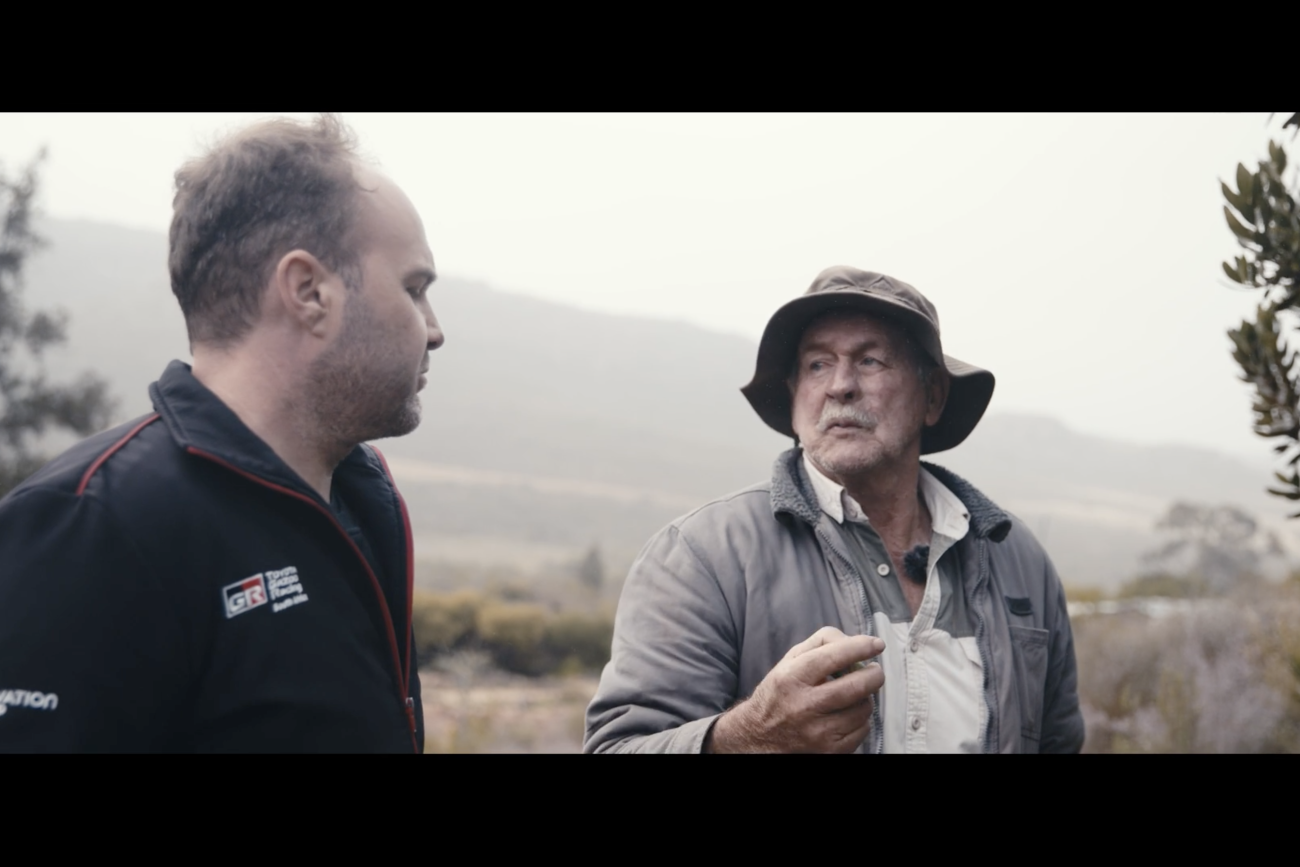
Oom Sypie’s story perfectly anchors this. His forefathers bought their farm on that mountain, which was an incredible feat of human resilience given the terrain in the early 1900s. The farm is called Kantoorshoek, which translates to Office Corner. Back in the day, Griqua and San tribes administered tribal justice in the corner of that farm. Going to the magistrate meant going to the office, so the land kept the name. It is a profound piece of verbal history.
Legends, Truths, and the Language of the Land
This brings me to the absolute core of what makes this place so fascinating. It is a place of stories, a place of legends, and a place built on the deepest contrasts.
There are a bunch of colloquialisms about where the name Maskam comes from. The tongue-in-cheek legend goes that during the Anglo-Boer War, the Cape Rebels and Boers fled up the mountain. The English soldiers waited at the bottom for fleeing rebels, declaring that they “must come” down, completely unaware of the escape road at the back. It is a fun story, and it sounds exactly like Maskam.
The reality of the name is far more rooted, far more ancient, and far more beautiful. Maskam actually means the mountain that yields water. Both Maskam and Matzikama are words rooted deeply in the Khoi and Griqua languages. This history was consciously chosen and honoured in the year 2000 when the name Matzikama was selected for the municipality. It was a deliberate move to acknowledge that complex and traditional history rather than making it something that it is not. It honours the indigenous roots of the people who knew exactly what that mountain meant for survival.
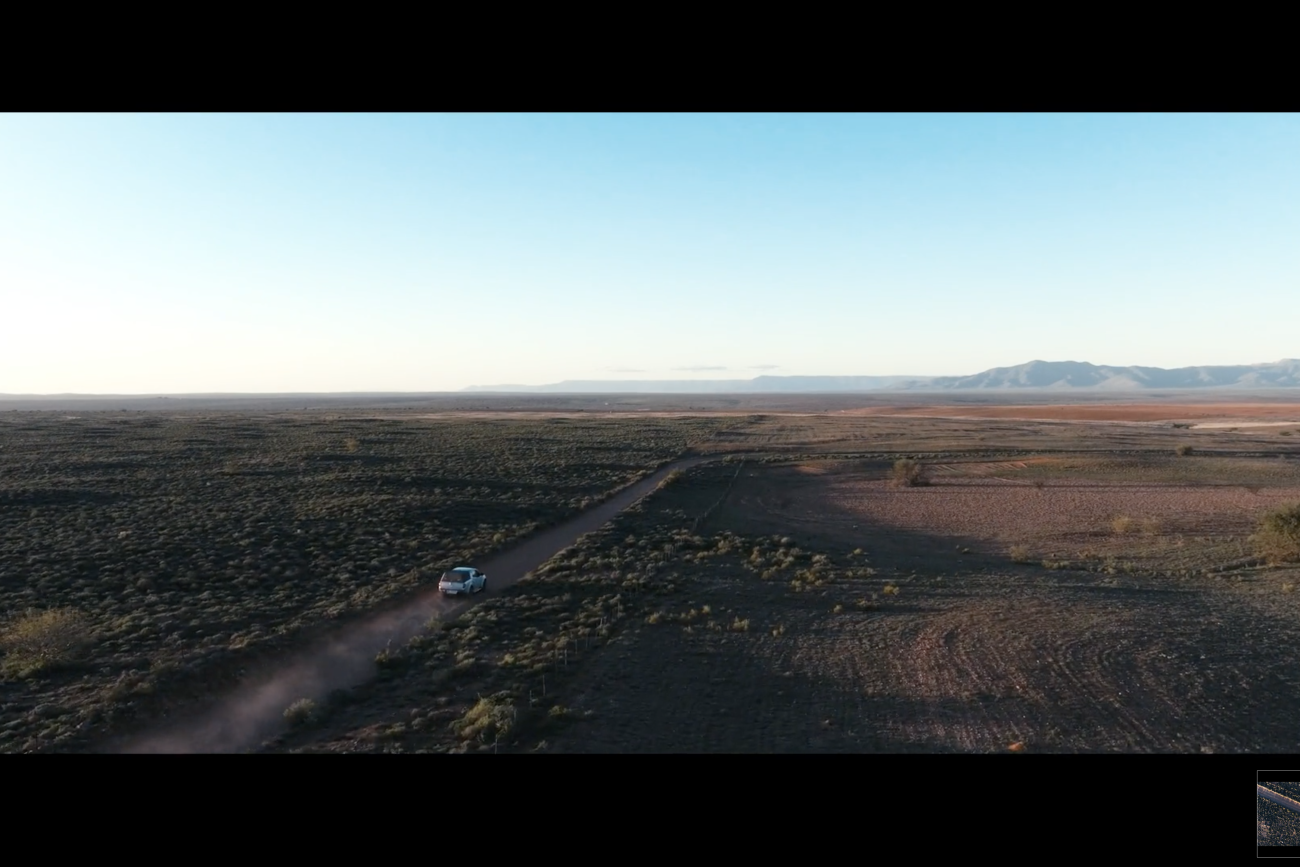
You see this same deep, layered history in the Knersvlakte. There are so many stories about how that flat, unforgiving landscape got its name. Some say it comes from the word “Knegte”, meaning servants. It was the area of the servants because it was the only land cheap enough for the poorest workers to afford. They went out into the harshest terrain to build something out of absolute nothing.
Other stories say it comes from the small quartz stones that literally crunch and gnash under your feet as you walk, giving it the name “Kners”. Then there is the legend of a rider and his dog setting up camp by the Salt River. The dog drank the salty water and gnashed its teeth, birthing the idiom that to survive in this region, you have to bite on your teeth and be incredibly tough.
Every single name in this region holds a contrast between a cute local anecdote and a profound story of survival. That is the big theme here. The contrast is locked up in the people, just as it is locked up in the mountain itself with its stark light and dark sides.
The Griqua tribes see this as a holy place. Their prophet, A.A.S le Fleur, servant of God, made predictions that came true and was revered as one of the most prolific seers of the 20th century and held in the same regard as Siener van Rensburg. Another origin of the Kenchtsvlakte name, as told by his descendent and chairperson of the National Khoi-San Council (NKC), Cecil le Fleur, was that seeing as this was where the the servant of God chose to establish the Griqual holy-place of Ratelgat, this became the area known as the Knechtsvlakte.


Making the Digital Tangible
Something very important to notice is that we made a conscious decision to withhold the actual photo at the end of the doccie. We wanted to tie it back to something tangible. We printed 1,000 high-quality postcards, of which there are roughly only 100 left. We handed them out in the community and some are still to be found at strategic points throughout the region.
If you received one of those postcards, you are one of 1,000 people holding a tangible piece of history linked to this digital product. The reason for that is crucial. We do not live in an online world. We do not live in a world of AI and screens. We live in a physically tangible place. We live in the dirt and the wind. If you really want to experience it, you have to go. You have to go and make your own memories there. It is not worth just watching something that someone else did.
True experience requires your physical presence. By being there, you are contributing to that economy. By being there, you are learning more about the space and the preciousness of the environment. That is exactly what we want to achieve. We want to make the digital tangible.
The Community Echo
I wanted the people of Matzikama to see themselves, their dialect, and their complexities reflected back with absolute care. We relied entirely on organic distribution. It is entirely about getting the right views from the right people.
The community response has been exceptional, proving the immense value of those fluffy metrics of pride and identity. People are seeing that mountain as if for the first time. The emotion in the feedback validates exactly why we made this.
“Wow wow wow!!!! Dit is ongelooflik!!! Die emosie is heeltyd tasbaar, puik aanbieding en fotografie!! Dit maak dat ek moet Maskam self gaan beleef!!”
“Wat ‘n amazing video! Jy vang die stories, en die diepte daarvan, so mooi vas. Besonders!”
“Dit sit ons Streek op die map.”
“Wow, This hit me differently because I see this mountain almost every day, But never have I seen it like this. The film slowed everything down, Letting me notice details I usually overlook.”
“Ek het hoendervel gekry net deur na hulle uitsprake en taal suiwerheid te luister. Veral die Griekwa Le Fleur Oom. Dis afgesien van hulle ongelooflike kennis van hul kontrei se geskiedenis, en hul ooglopende liefde en passie vir hierdie pragtige, soms ongenaakbare wêreld. Uitstekend!”
“Ek het hierdie video tussen die trane deur sit en kyk terwyl ek die kruie reuk van die berg inasem. Se asb vir die videograaf baie dankie.”
“Ek sit en tjank nou hier by myself. Ek ken die filmmakers glad nie but eish, hulle het binne my baie ge-stir. Se net vir hulle ek se GROOT dankie!!!”
The Next Chapter
Op soek na Maskam is just the beginning. The Matzikama only really started popping in the late 1800s. People with few resources went there to build a life.. It is the heartland of the Khoisan and Griqua cultures, possessing a rich verbal history that is slowly fading.
Our major objective is to capture this untold history for future generations. We must preserve these roots so we can always understand the type of people who built something out of nothing.
The doccie provides a robust platform to tackle future projects in this region.
Die Kanaalprojek is the fascinating story of how over 100 kilometres of water canals were hand-dug by manual labour in the early 1900s to create an irrigation scheme in a desert area.
Then there is the succulent poaching crisis. Plants that take up to 150 years to grow are being poached for the exotic trade, destroying our unique biome. We interviewed Christine Wiese, who runs a succulent nursery in containment to protect the environment. Her insights represent a vital story that requires its own dedicated film.
Finally, we are proposing a project exploring the unique phenomenon of the Catholic mission churches in the region. This project will anchor a deep-rooted history while showcasing the breathtaking landscape.
We tell compelling stories for a living, but these are the stories of the people of Matzikama, the stories of South African innovation and resilience. We are purely the vessel. We identify and facilitate the storytelling process, holding up the mirror to the local people to showcase exactly who they are to the world. It is an absolute honour and a privilege to do that.
If you would like to get involved in any of these upcoming projects, please reach out. We would love to hear from you.

Melt van der Spuy
Founder & Strategic Director
Melt van der Spuy is the Founder of Tall Giraffe Video, a consultancy that helps established brands, purpose-driven institutions and complex organisations solve communication problems.
Having grown up on a farm and worked as a teacher before becoming a filmmaker, Melt brings a practical, long-term approach to brand strategy. He focuses on building lasting trust rather than chasing short-term digital trends.
As a strategist and director, Melt helps leaders simplify their messaging and translate their value into video tools that work for their business around the clock.